
Basement Finishing in Ravenswood, Chicago: What Homeowners Need to Know About Stone Foundations, Old Drainage, and Getting It Right
Ravenswood basement finishing requires more preparation than most Chicago neighborhoods because of the area’s pre-war housing stock. Most homes between Montrose and Foster, from Clark Street to the Chicago River, sit on stone or brick foundations built between the 1880s and 1920s. Before any finishing work begins, homeowners need to address moisture control, foundation condition, ceiling height limitations, and Chicago’s strict building permit requirements.
If you own a home in Ravenswood, you’re probably sitting on 400 to 800 square feet of untapped space below grade. The neighborhood’s housing stock, a mix of Victorians near the East Ravenswood Historic District, Chicago bungalows along the blocks west of Ravenswood Avenue, brick two-flats between Damen and Western, and courtyard buildings closer to Lincoln Avenue, almost always includes a full basement. The question isn’t whether you have the space. It’s whether that space is doing anything useful for your family.
These basements were built for storage, coal delivery, and mechanical systems. Basement finishing in a home this old, whether the goal is a home office, playroom, guest suite, or rec room, takes a contractor who understands what’s happening below grade. Here’s what we tell every Ravenswood homeowner who calls us about a basement project.
What Makes Ravenswood Basements Different From Newer Chicago Homes?
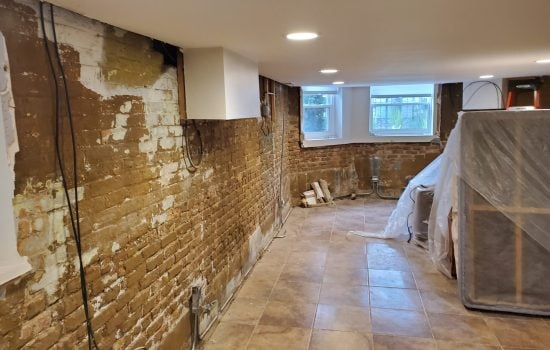
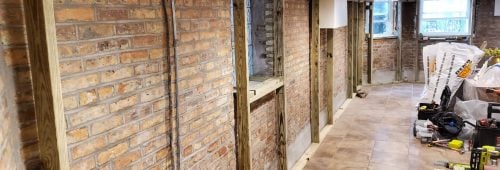
Most Ravenswood homes have stone or brick foundations rather than poured concrete, which means moisture behaves differently and standard waterproofing methods don’t always apply. The mortar joints between stones degrade over decades, creating paths for water intrusion that must be addressed before any finishing work begins.
Walk the residential blocks from the quiet streets near Winnemac Park to the bungalows closer to Western Avenue, and you’ll see homes built across four decades of Chicago’s residential construction boom. The earlier homes from the 1880s and 1890s are variations of Italianate and Queen Anne styles. By the 1910s and 1920s, the Chicago bungalow dominates. All of them share one thing: foundations that were never designed for finished living space.
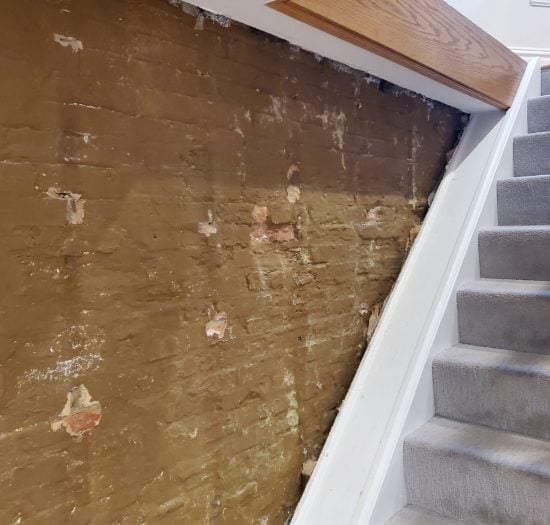
Stone and brick foundations require a different approach than modern concrete. Before framing a single wall, the foundation needs assessment for crumbling mortar, signs of bowing or lateral movement, and active water intrusion. In many cases, repointing deteriorated mortar joints and applying an appropriate waterproofing membrane are necessary first steps. We’ve seen too many Ravenswood basements where a previous contractor skipped this work and framed directly against compromised walls. Within two to three years, mold behind the drywall, efflorescence on the studs, and soft spots in the subfloor tell the whole story.
How Do You Handle Moisture and Waterproofing in a Ravenswood Basement?
Ravenswood basement waterproofing typically requires interior drain tile with a sump pump, a backwater valve to prevent Chicago’s combined sewer backups, and closed-cell spray foam insulation against the foundation walls. Exterior grading corrections along the narrow gangways between homes are also critical.
Chicago’s combination of clay-heavy soil, a relatively high water table, and the city’s combined stormwater and sanitary sewer system creates a uniquely challenging environment for any below-grade space. Ravenswood is no exception. Standard residential lots here are only 25 feet wide, which means neighboring homes are close together and one property’s drainage problem can easily become yours.
Here’s what we evaluate and address before any finishing work begins:
- Interior drain tile and sump pump: If your home doesn’t already have a perimeter drainage system, installing one before finishing is non-negotiable. We always recommend a battery backup sump pump, too. Chicago storms can knock out power for hours, and your finished basement is only as good as its ability to stay dry during the worst weather.
- Backwater valve: Chicago’s combined sewer system is notorious for backups during heavy rain events. A backwater valve prevents sewage from flowing back into your basement through floor drains. This single installation can be the difference between a minor inconvenience and a catastrophic loss after you’ve invested in a finish.
- Gangway grading and downspout extensions: The paved gangways between Ravenswood homes are often improperly sloped, directing stormwater toward foundations rather than away. Correcting the grade and extending downspouts away from the foundation are low-cost fixes with outsized impact.
- Closed-cell spray foam insulation: Against stone or brick foundation walls, closed-cell spray foam serves double duty as both thermal insulation and vapor barrier. It’s one of the most effective solutions for older Chicago basements where traditional batt insulation would trap moisture and create mold problems.
What About Low Ceiling Heights in Ravenswood Bungalows and Two-Flats?
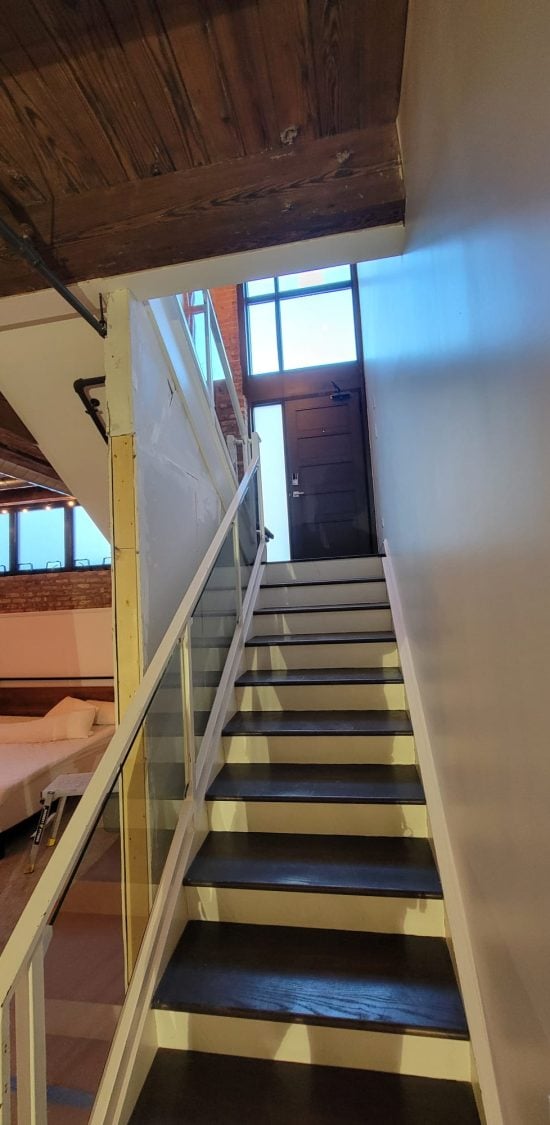
Chicago building code requires a minimum 7-foot ceiling height for habitable basement rooms. Many Ravenswood bungalows and older two-flats fall close to or slightly below this threshold, especially after accounting for ductwork, plumbing runs, and structural beams.
This is one of the first things we measure during an initial walkthrough. Once you subtract the depth of existing HVAC ductwork, waste lines, and any steel beams, the usable clearance in a Ravenswood basement can drop to 6’8” or less in spots.
There are several practical ways to work within these constraints:
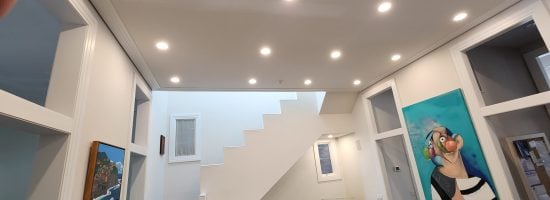
- Recessed LED lighting: Saves 3 to 4 inches of headroom compared to flush-mount fixtures. Over an entire basement ceiling, that’s meaningful.
- Perimeter soffits for ductwork: Routing mechanical runs into built-in soffits along the walls keeps the center of the room at full height. Done well, soffits look intentional and can even incorporate indirect lighting.
- Underpinning (lowering the floor): For homeowners who need more than a couple of inches, underpinning is an option. It’s a significant investment, typically $15,000 to $40,000 depending on basement size and soil conditions, but it can transform an unusable space into a fully code-compliant room.
The key is designing the layout around existing mechanicals from day one. Structural posts, low beams, and utility runs should feel intentional in the final design, not like obstacles you worked around as an afterthought.
Do You Need a Permit to Finish a Basement in Ravenswood, Chicago?
Yes. The City of Chicago requires building permits for all basement finishing work that involves framing, electrical, plumbing, or structural modifications. Permit costs typically range from $1,000 to $3,000, and processing takes 2 to 5 weeks through the Chicago Department of Buildings.
If your project includes a basement bedroom, egress is non-negotiable. Chicago code requires an egress window with a minimum 5.7 square foot opening, at least 20 inches wide and 24 inches tall, with a maximum sill height of 44 inches from the finished floor. Below-grade windows need a window well at least 36 inches wide. Budget $3,000 to $7,000 for a complete egress window installation.
Working with a licensed general contractor who handles the full permitting process, from architectural drawings through final inspections, saves considerable time and keeps your project on the right side of code. We manage every permit application and inspection for our Ravenswood clients. Unpermitted basement work creates real problems at resale, refinancing, or if you ever need to file an insurance claim on the space.
How Much Does It Cost to Finish a Basement in Ravenswood?
Basement finishing in Ravenswood typically costs $55 to $150 per square foot depending on scope and existing conditions. For a typical 600 square foot basement, that translates to $33,000 to $90,000. Chicago projects generally run 10 to 15 percent above national averages due to permitting, older building stock, and local labor costs.
Here’s how that breaks down by project level:
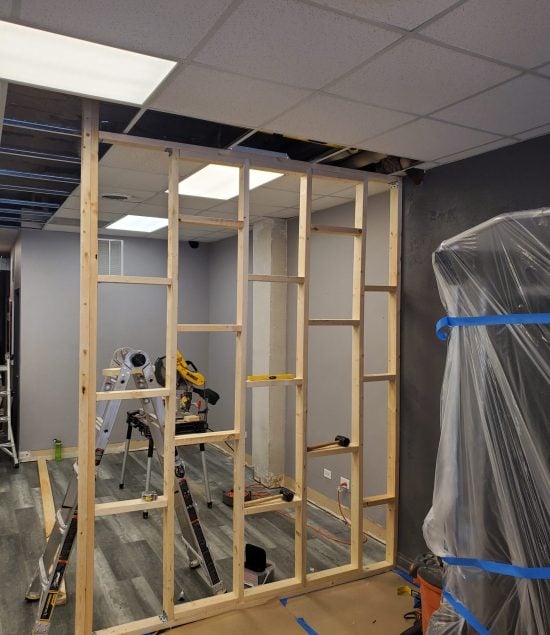
- Basic finish (framing, drywall, flooring, recessed lighting): $55 to $80 per square foot
- Mid-range with bathroom and egress window: $80 to $120 per square foot
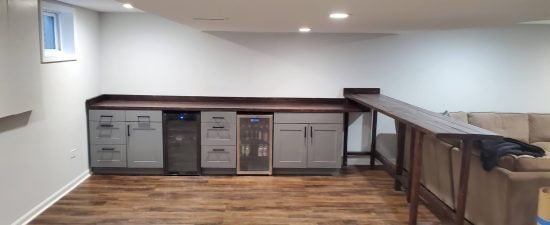
- High-end with wet bar, custom built-ins, luxury finishes: $120 to $150+ per square foot
Waterproofing, foundation repair, and underpinning (if needed) are typically in addition to the finishing costs above. We provide a detailed scope and estimate after an in-home assessment so there are no surprises once the project starts.
The return on investment is strong. A well-finished basement in Ravenswood typically returns 65 to 70 percent at resale. With the neighborhood’s median home price around $550,000 and homes selling within an average of 10 days, the added finished square footage is a real differentiator for buyers.
Why Ravenswood Is Worth the Investment
Ravenswood’s appeal is well established and growing. Families are drawn to the walkability, easy Brown Line access at the Montrose and Damen stations, strong neighborhood schools like Ravenswood Elementary and Waters Elementary, and the distinctive character of a neighborhood that still feels like a small community inside a major city. The craft breweries along Malt Row on Ravenswood Avenue, the restaurants and shops on Lincoln Avenue, and green spaces like Welles Park and Winnemac Park make this one of the North Side’s most livable neighborhoods.
Adding a finished basement, whether it’s a playroom, home office, guest suite, or rec room, gives your home the functional square footage that Ravenswood’s vintage housing stock often lacks above grade. For growing families in particular, it can be the upgrade that makes the difference between staying in a home you love and moving to a bigger one you don’t. And once the basement is done, many homeowners find that a kitchen remodel or bathroom renovation is the natural next step to bring the rest of the home up to the same standard.
Ready to Talk About Your Ravenswood Basement?
Every Ravenswood basement is different. The foundation type, moisture history, ceiling height, and existing mechanicals all shape what’s possible and what it will cost. The best first step is a straightforward conversation about your space.
Get an Eric, LLC is a licensed general contractor based in Chicago, serving Ravenswood and the surrounding North Side neighborhoods including Lincoln Square, North Center, Andersonville, and Lakeview. We handle basement finishing projects from initial assessment through final inspection, including waterproofing, permits, and every trade in between.
Call us at (773) 692-9573 or request a free estimate online.
About Get an Eric, LLC
Get an Eric, LLC is a licensed general contractor serving Chicago and the North Shore suburbs. We specialize in basement finishing, kitchen remodeling, bathroom renovations, and whole-home renovations. Our team works exclusively on residential remodeling projects across Ravenswood, Lincoln Square, North Center, Andersonville, Lakeview, Lincoln Park, Evanston, Wilmette, and surrounding communities. Every project is managed in-house, from permits and planning through final walkthrough.
Frequently Asked Questions About Basement Finishing in Ravenswood
Here are the questions Ravenswood homeowners ask us most often before starting a basement finishing project.
Do I need a permit to finish my basement in Ravenswood, Chicago?
Yes. The City of Chicago requires building permits for all basement finishing projects involving framing, electrical, plumbing, or structural changes. Permit costs typically range from $1,000 to $3,000, and processing through the Chicago Department of Buildings takes 2 to 5 weeks. Your general contractor should handle the full permit application, required drawings, and all inspections.
Can you finish a basement with a stone or brick foundation?
Absolutely. Many Ravenswood homes have stone or brick foundations dating to the late 1800s and early 1900s. These foundations need extra preparation, including mortar repointing, waterproofing, and appropriate insulation like closed-cell spray foam, but they can support a beautiful, long-lasting finished space when the work is done correctly.
How much does it cost to finish a basement in Ravenswood?
Basement finishing in Ravenswood typically costs $55 to $150 per square foot. A basic 600 square foot finish runs around $33,000 to $48,000. Adding a bathroom and egress window brings the range to $48,000 to $72,000. High-end builds with wet bars and luxury finishes can exceed $90,000. Chicago costs run 10 to 15 percent above national averages.
How long does basement finishing take in Chicago?
Basic basement finishing typically takes 4 to 6 weeks of active construction. Projects that include a bathroom or egress window generally take 6 to 10 weeks. Add 2 to 5 weeks for Chicago permit approval before construction begins. Waterproofing and foundation prep, if needed, can add additional time upfront.
What is the minimum ceiling height for a finished basement in Chicago?
Chicago building code requires a minimum ceiling height of 7 feet for habitable basement rooms. Many older Ravenswood bungalows and two-flats are close to or slightly below this mark. Options include recessed LED lighting to save inches, building soffits along the perimeter for ductwork, or underpinning to lower the basement floor (typically $15,000 to $40,000).
Is finishing a basement in Ravenswood a good investment?
In most cases, yes. A well-finished basement in the Ravenswood area typically returns 65 to 70 percent of the investment at resale. With median home prices around $550,000 and homes selling within an average of 10 days, added finished square footage is a strong selling point. Beyond resale value, the day-to-day functionality a finished basement adds for families is often the bigger motivator.